After researching this topic, I found that one man was indispensable to the recovery effort. Hugh Hammond Bennett, a soil scientist, organized groups that helped bring nutrients back and keep the soil from blowing away. Bennett had studied soil all across the country, and he realized that Oklahoma needed more trees with strong roots to keep the soil in place.

Hugh Hammond Bennett
To get the work started, following Bennett's advice, Roosevelt passed the Soil Conservation Act in 1935. This called for two hundred million native red cedar and green ash trees to be planted throughout the dust bowl area. These types of trees were very bushy, which made them great wind breakers for the surrounding soil. The new trees also brought nutrients to area, since when a tree dies, all of its nutrients go back into the soil. Not only was the soil helped by this act, but the remaining farmers were too; anyone who used a soil conservation method was paid a dollar per acre.
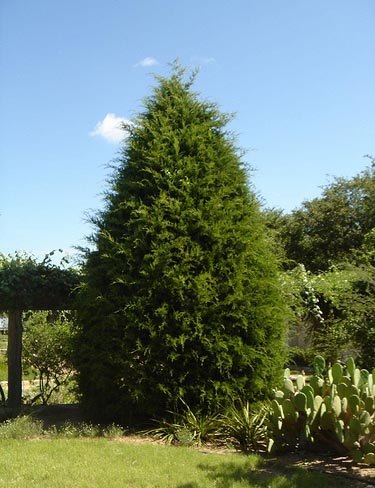
Wind Breaking Red Cedar Tree
Bennett's efforts proved to be successful, as there was a 65% reduction in the amount of soil blowing away by 1938.
This project was very interesting to me because of how drastically the environment was changed by humans in such a short period of time. Using science and the incentive of money, the government was able to improve something that had been near to a natural disaster. Contrary to the image that we saw of the high gas prices due to taxes, I know think that the government did more good than harm. I predict that the novel will leave out any indications that the farmers were helped, because Steinbeck tried to increase sympathy toward the plains farmers.

No comments:
Post a Comment